


Intro: Blog vs social media, why this is even a real question
For small businesses, this question is not just a marketing theory thing. It is a real time, money and energy question.
Should you spend your limited time writing blog posts? Or should you focus on Instagram, Facebook, TikTok, LinkedIn, Pinterest or whatever platform your customers seem to be using now?
Honestly, both can work. But they do not work in the same way.
Social media is usually faster. You post something, people may like it, comment on it, share it or message you. It feels active. It feels alive. It can also feel like something is happening right now.
A blog is slower. You write an article, publish it on your website, optimise it properly, and then wait for people to find it through Google, your website, email, social media or other links. Not as exciting at first, yes. But the payoff can last much longer.
So the better question is not really: “Which one is better?”
The better question is: “Which one should be the main focus for my small business right now?”
For most small businesses, the practical answer is this: focus on your blog as the long-term content base, then use social media to support it. Social media is useful, but it should not be the only place where your best content lives.
Why blogs are still powerful for small businesses
Should you spend your limited time writing blog posts? Or should you focus on Instagram, Facebook, TikTok, LinkedIn, Pinterest or whatever platform your customers seem to be using now?
Social media is usually faster. You post something, people may like it, comment on it, share it or message you. It feels active. It feels alive. It can also feel like something is happening right now.
A blog is slower. You write an article, publish it on your website, optimise it properly, and then wait for people to find it through Google, your website, email, social media or other links. Not as exciting at first, yes. But the payoff can last much longer.
So the better question is not really: “Which one is better?”
The better question is: “Which one should be the main focus for my small business right now?”
For most small businesses, the practical answer is this: focus on your blog as the long-term content base, then use social media to support it. Social media is useful, but it should not be the only place where your best content lives.
Why blogs are still powerful for small businesses
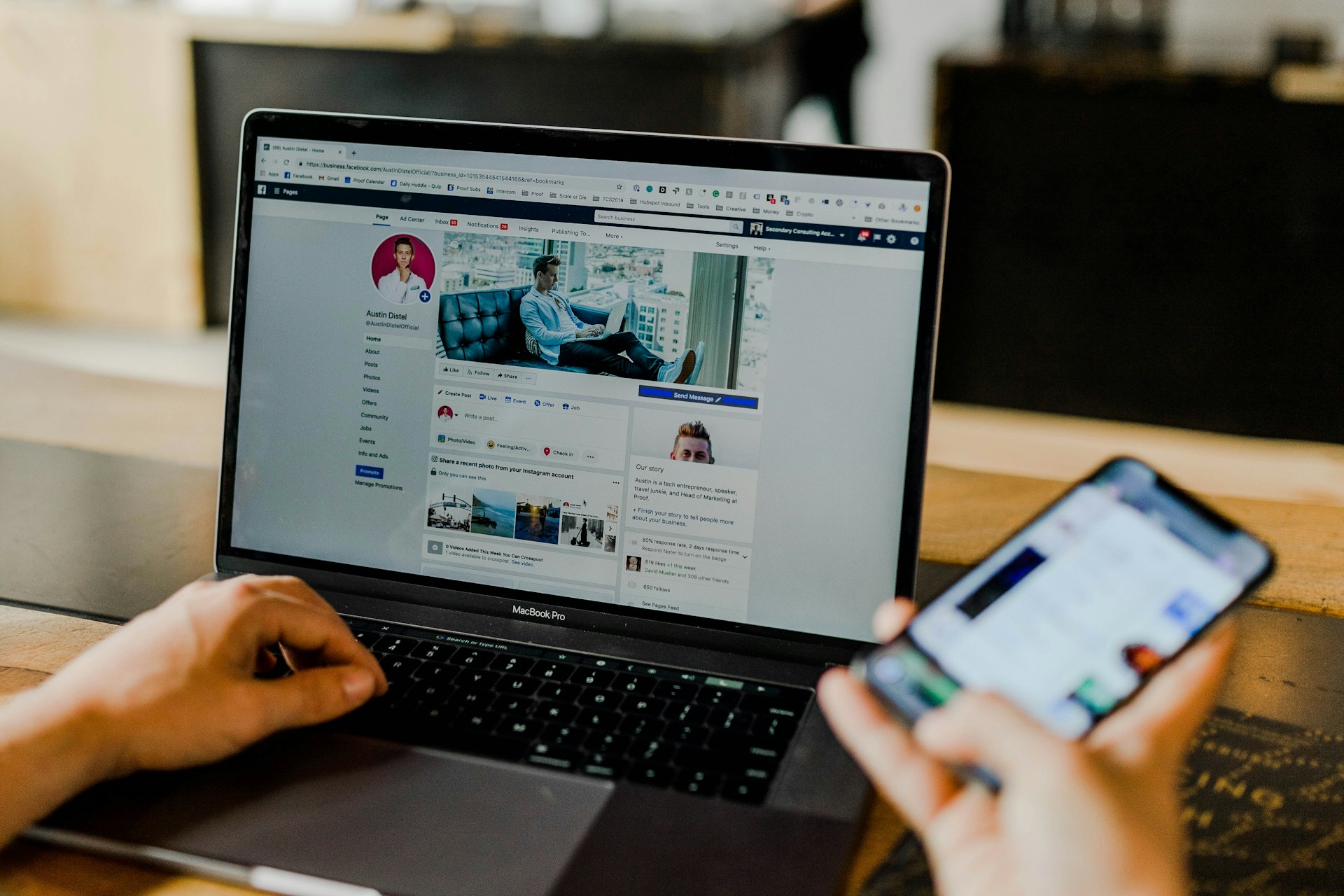
Photo credit: Photo by Austin Distel on Unsplash
A blog may sound old-school compared with short videos and social media trends, but it still has one very important advantage: it lives on your own website.
That matters a lot. When you publish a blog post, it becomes part of your business asset. It can help people find you through search. It can explain your service properly. It can answer common customer questions. It can also show that you know what you are talking about without needing to hard-sell every day.
Blogs build long-term search traffic
A good blog post can keep bringing visitors to your website long after the day you publish it. For example, let’s say you run a beauty salon. A social media post about “how to maintain hair colour after colouring” may get attention for a few days. But a blog post on the same topic could continue showing up when people search for that question later.
That is the key difference.
Social media depends heavily on the feed. Blog content can be found by search intent.
Someone scrolling social media may not be looking for your service. But someone searching “how often should I do scalp treatment” or “facial treatment for dull skin” is already showing interest. That person may be much closer to becoming a customer.
Blogs help prove expertise and trust

https://www.pexels.com/photo/digital-planning-on-tablet-with-stylus-pen-33342584/
A blog also gives you space to explain things properly.
On social media, you often have to simplify everything. Short caption. Quick hook. Nice image. Fast video. It can work, but it does not always give enough room to explain why your service is different.
A blog lets you go deeper.
For example, a salon could write about:
How to choose the right facial for sensitive skin
Why hair treatment results differ from person to person
What customers should know before a slimming treatment
How to maintain results after a whitening beauty service
Why cheap treatments may not always be the safest choice
These topics build trust because they educate before selling.
And for small businesses, trust is very important. You may not have the huge advertising budget of big brands, but you can still win through useful, clear and honest content.
How to choose the right facial for sensitive skin
Why hair treatment results differ from person to person
What customers should know before a slimming treatment
How to maintain results after a whitening beauty service
Why cheap treatments may not always be the safest choice
Blogs give your content a proper home
Another big advantage: your blog is not buried inside someone else’s platform.
On social media, your content sits in a fast-moving feed. Even if a post is good, it can disappear quickly. People may see it today and forget it tomorrow. Worse, the platform may change its algorithm, reduce your reach, suspend your account or push businesses to pay for visibility.
With a blog, the content sits on your website.
That means people can browse it, search it, link to it, revisit it and move from one article to another. You can also guide them to your service page, booking page, enquiry form, newsletter or product page.
In other words, a blog is not just “content”. It is part of your customer journey.
Blogs can feed your email and social content
Blogs can feed your email and social content

Photo credit: https://www.pexels.com/photo/woman-using-smartphone-and-laptop-4549414/
This is where blogging becomes even more practical.
One blog post can become many smaller pieces of content.
For example, one blog article can be repurposed into:
3 to 5 social media captions
1 email newsletter
1 carousel post
1 short video script
1 FAQ section
1 lead magnet idea
Several quote-style posts
So instead of asking, “Do I need to create separate content for every platform?”, you can start with one solid blog post and break it down.
This saves time and keeps your message consistent.
Why social media still matters

Photo credit: Photo by Brett Jordan on Unsplash
Social media is better for quick interaction
The biggest strength of social media is speed.
You can post something and get a reaction quite quickly. Customers can comment. People can ask questions. You can reply in real time. For service businesses, this helps create a sense of personality and connection.
Social media is also useful for showing what is happening now.
For example:
New promotion
New branch opening
Behind-the-scenes content
Customer transformation photo
Staff introduction
Before-and-after result
Limited-time appointment slot
Event or campaign update
These are the types of content that social media handles well.
Social media is better for quick interaction
Social media is better for quick interaction
Social media is better for quick interaction
New promotion
New branch opening
Behind-the-scenes content
Customer transformation photo
Staff introduction
Before-and-after result
Limited-time appointment slot
Event or campaign update
Visual businesses can benefit more from social platforms
Photo credit: AtlanPhoto credit: Photo by Walls.io on Unsplash tic Ambience - Photography @ Pexels
Some businesses naturally perform better on social media due to their highly visual nature.
For instance, beauty salons, cafés, fashion stores, bakeries, fitness studios, interior design businesses and travel brands are among the business types that typically come with visually striking or aspirational content that people enjoy seeing casually and that is often appreciated for its aesthetics.
So, put simply, as long as your product or service looks good visually, social media can act as a real catalyst that helps people spot you really quickly and even go viral.
Meanwhile, blog posts that are capable of explaining the “why” behind the service are more readily able to create the “wow” effect on social media too since it’s kind of like a “secret” being revealed to the general public.
Social media helps with feedback and community
Despite all the seemingly obvious benefits of social media above, the flip side of it is equally worrying, since social media reach is not something anyone can fully own.
The truth is, even if one has a substantial number of followers, not every follower will see every post. Algorithms change. Competition is intense. People scroll fast. The platform decides what gets shown.
This is why depending only on social media can become exhausting.
You keep posting because you feel you must stay visible. But every post has a short lifespan. Then you need another post. Then another. Then another.
That cycle can easily drain a small business owner.
But reach is not fully under your control
Clearly, another benefit of social media is instant feedback and interaction with the community/fans.
If people respond strongly to a certain topic, question or post style, that normally tells you something. Go ahead and leverage those reactions to decide what to write further later.
Basically, topics that most people ask / talk about under your post are ready-to-develop topics that you should not miss, for social media can be a good testing ground. It helps you spot what your audience cares about before you spend time writing a longer article.
Blog vs social media: the key differences

Photo credit: Photo by Tech Style Club on Unsplash
The easiest way to compare blog vs social media is to look at what each one is best at.
Ownership: your website vs rented platform space
Your blog is on your website. That means it is closer to being your own asset.
Social media is a rented space. You can build an audience there, but you are still playing by the platform’s rules.
This does not mean you should avoid social media. It simply means your most valuable content should not only live there.
If a piece of content explains your service, answers customer questions, builds trust or helps people decide whether to buy from you, it should probably be on your website first.
Lifespan: evergreen article vs fast-moving post
A blog post can stay useful for months or even years if the topic is evergreen.
A social media post often has a much shorter lifespan. It may perform well for a day, a few days or maybe slightly longer, depending on the platform. But generally, social media content moves fast.
So if the content is important, do not leave it only as a social post.
Turn it into a blog post. Then use social media to bring people to it.
Intent: search-based readers vs scrolling users
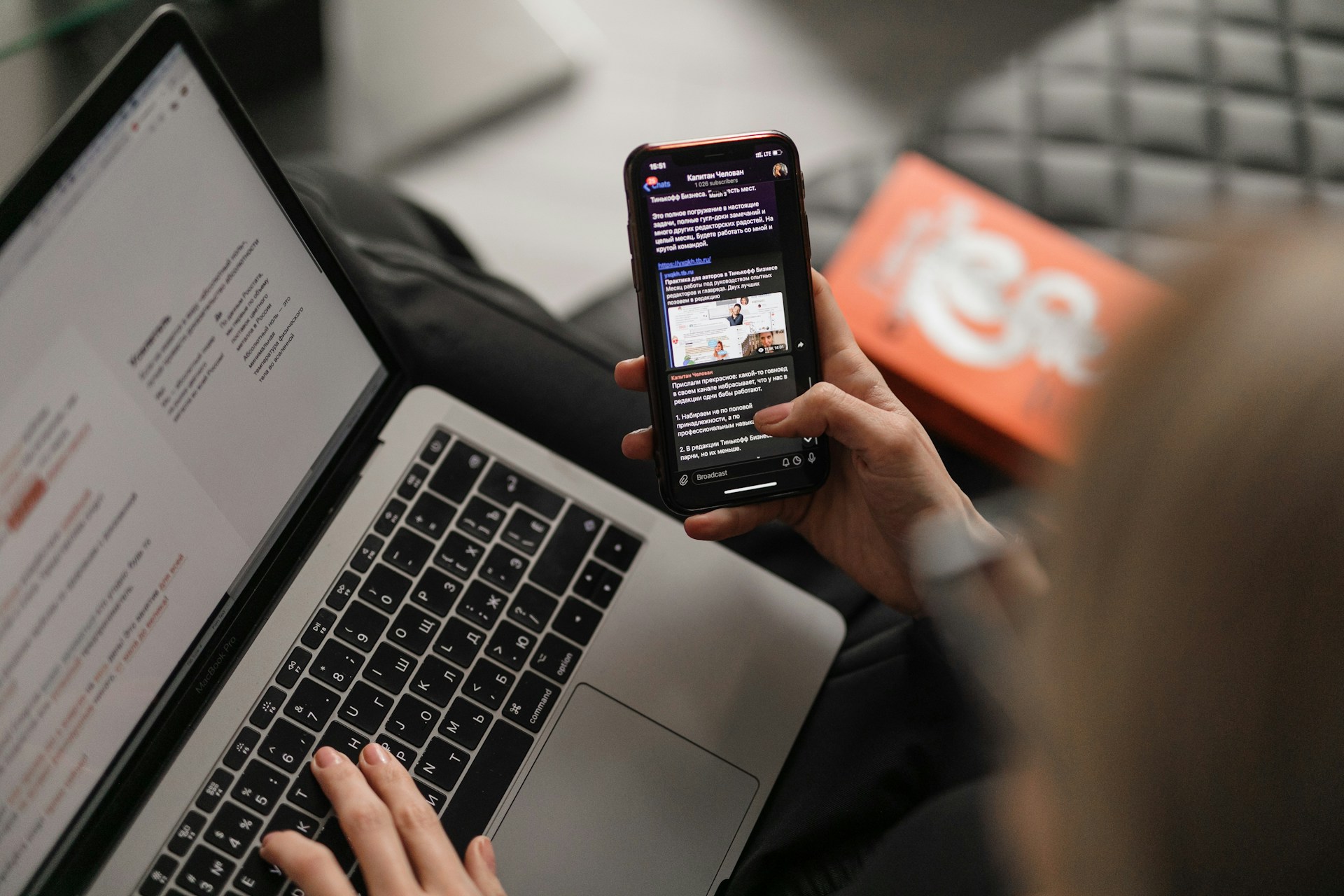
Photo credit: Photo by Maxim Ilyahov on Unsplash
Blog readers often arrive through intent.
They searched for something. They clicked something. They want an answer.
On the other hand, social media users, in contrast, are constantly scrolling. They may or may not be interested in something, but they normally are not in the position or mood to actively search for a solution at that moment.
That is why blog traffic can often be more valuable, since they are found and consumed by people who may already have a problem, a question or a need and with clear intent to actively look for a solution.
For small businesses, that matters because you do not just want views. You want the right people to take action.
Effort: deeper content vs constant content
Make no mistake, blogging takes more effort upfront. You need to plan, write, format, optimise and publish properly.
But once the article is done, it can keep working, especially for evergreen content.
Conversely, social media posts may be quicker to create, but they require constant, persistent feeding for updates. Once you stop posting, visibility may drop quickly too.
So ultimately, the choice is really about energy.
Would you rather keep producing small pieces of content all the time? Or create fewer, deeper pieces that can be reused and found later?
For many small businesses, the second option is undoubtedly more sustainable.
But once the article is done, it can keep working, especially for evergreen content.
Conversely, social media posts may be quicker to create, but they require constant, persistent feeding for updates. Once you stop posting, visibility may drop quickly too.
So ultimately, the choice is really about energy.
Would you rather keep producing small pieces of content all the time? Or create fewer, deeper pieces that can be reused and found later?
For many small businesses, the second option is undoubtedly more sustainable.
How small businesses should choose where to focus
Start with your business goals

Photo credit: Photo by Vitaly Gariev on Unsplash
Obviously, for anyone who is targeting long-term website traffic, search visibility and authority, blogging should be the focus.
At the same time, if you aim for quick awareness, community building and visual engagement, then social media is the quick, clear option for achieving those.
However, for a more balanced lead generation setup, the best approach is usually a mixture of:
Blog to attract and educate
Social media to distribute and engage
Email list to nurture
Website/service page to convert
Look at your customer behaviours
Going through the quick checklist of questions below about your client’s behaviour can help to shed some light on what you should prioritise: blogging or social media?
Do customers search online before buying this service?
Do they need education before making a decision?
Do they compare providers?
Do they ask many questions?
Do they need trust before enquiring?
If yes, blogging is very important. Nonetheless, if your product is highly visual, trendy, impulse-based or lifestyle-driven, social media also matters a lot.
Do customers search online before buying this service?
Do they need education before making a decision?
Do they compare providers?
Do they ask many questions?
Do they need trust before enquiring?
Check your team, time and budget
Many small businesses make the mistake of copying big brands’ practices without considering their resource constraints.
For a one-person business or small team, for example, it can be rather tough to stick with the routine of posting everywhere every day. You will burn out, and the quality will drop.
So, a more realistic, manageable plan may look like the following instead:
Publish 1 good blog post per month
Repurpose it into 4 to 8 social posts
Send 1 email newsletter from the same topic
Update older blog posts when needed
Track which topics bring enquiries
Publish 1 good blog post per month
Repurpose it into 4 to 8 social posts
Send 1 email newsletter from the same topic
Update older blog posts when needed
Track which topics bring enquiries
Use the “blog first, social second” rule if unsure
In case you are unsure where to start or focus, let’s apply this rule:
Create the important content on your blog first. Then use social media to share, simplify and promote it. So your content can have a longer life.
For example, instead of posting a long caption on Instagram about “how to choose the right facial treatment”, write a proper blog post first. Then create social posts from it:
A carousel summarising the points
A caption linking back to the article
A customer FAQ based on the topic
A story poll asking about skin concerns
A short video explaining one tip
A carousel summarising the points
A caption linking back to the article
A customer FAQ based on the topic
A story poll asking about skin concerns
A short video explaining one tip
Conclusion — So, Should Your Business Blog?

Photo credit: Image by Werner Moser from Pixabay
The honest answer
The honest answer
The honest answer
Yes — if your customers research before buying, need to trust you first, or if what you sell takes some explaining, blogging is almost certainly worth your time. The businesses that show up consistently with useful content are the ones that build the most loyal audiences, and a more engaged audience almost always means more customers.
Unlike social media, your blog is an asset you fully own. Every post you publish can keep bringing in the right people for months or years — no algorithm changes, no platform disappearing overnight. If you're not sure where to begin, a good starting point is understanding how to choose the right topics for your business blog and then following a clear process on how to write a blog post for your website.
Start with what you know. Publish consistently. Think of every post as a long-term investment, not a one-time task.